Find a UK-based prescribing clinician for medical cannabis.
Why Quality Testing Matters in Medical Cannabis
- Unlike pharmaceutical drugs, cannabis is a complex botanical with hundreds of active compounds
- Without rigorous testing, potency, purity, and safety cannot be guaranteed
- EU-GMP mandates comprehensive batch testing before any product can be released to patients
- Testing covers cannabinoid content, terpene profile, microbiological safety, and contaminant screening
- A Certificate of Analysis (CoA) is issued for every batch — available to prescribers and patients on request
Quality testing is the cornerstone of pharmaceutical-grade medical cannabis. The difference between a tested, certified batch and an untested, illicit product is not merely regulatory — it is the difference between reliable, reproducible medicine and an unpredictable substance of unknown composition. Understanding what the tests mean empowers patients to ask the right questions and make informed choices.
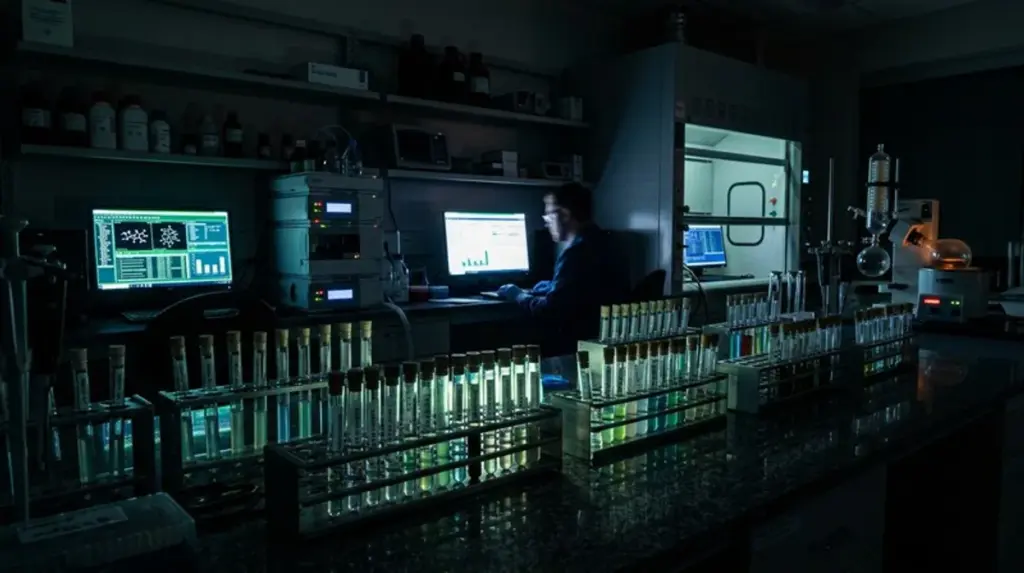
High-Performance Liquid Chromatography (HPLC): The Gold Standard for Cannabinoids
- HPLC separates and quantifies individual cannabinoids in a sample with high precision
- It measures the exact concentration of THC, CBD, CBG, CBN, THCV, and other cannabinoids
- HPLC does not require heating the sample — preserving cannabinoid acids (THCA, CBDA) in their native form
- Results are expressed as a percentage by weight (e.g. 20% THC, 1% CBD)
- HPLC data on a CoA should match the labelled potency within tight pharmaceutical tolerances
HPLC is the primary method used by licensed medical cannabis laboratories across Europe. Its ability to distinguish between cannabinoid acids (THCA, CBDA) and their active counterparts (THC, CBD) is particularly important — patients vaporising flower convert THCA to THC through decarboxylation, while those using oral oils receive predominantly CBD/THC rather than the acid form. A well-constructed CoA will provide both acid and activated cannabinoid values.
Gas Chromatography-Mass Spectrometry (GC-MS): Contaminant Screening
- GC-MS is the standard technique for identifying and quantifying residual solvents and pesticide residues
- It vaporises the sample and separates compounds by molecular weight and interaction with a chemical column
- Mass spectrometry then identifies each compound by its unique fragmentation pattern
- EU-GMP requires testing against a panel of over 200 regulated pesticides
- Residual solvents from extraction processes (butane, ethanol, propane) must fall below strict limits
GC-MS is the analytical workhorse for contamination screening in medical cannabis. A clean GC-MS report confirms that the product you receive contains no regulated pesticide residues above safe limits and no residual solvents from the extraction process. For patients with immune compromise, chronic illness, or medication sensitivity, this confirmation is not a bureaucratic nicety — it is a meaningful health protection.
Microbiology and Heavy Metal Testing
- Yeast and mould counts must fall below strict EU pharmacopoeial limits
- E. coli and salmonella must be absent — tested by culture and PCR methods
- Heavy metals (lead, cadmium, arsenic, mercury) are tested by ICP-MS — cannabis accumulates soil contaminants
- Aflatoxins — carcinogenic moulds produced under improper storage — are screened in all lots
- Post-irradiation microbial testing confirms effective sterilisation
Microbiological and heavy metal testing complete the quality picture. Cannabis is a bioaccumulator — it absorbs contaminants from soil and growing media — making heavy metal testing especially important for products grown in regions with contaminated land. Microbial limits protect vulnerable patients, particularly the immunocompromised. When choosing a medical cannabis supplier, always request access to the full Certificate of Analysis — a reputable producer will share it freely.